
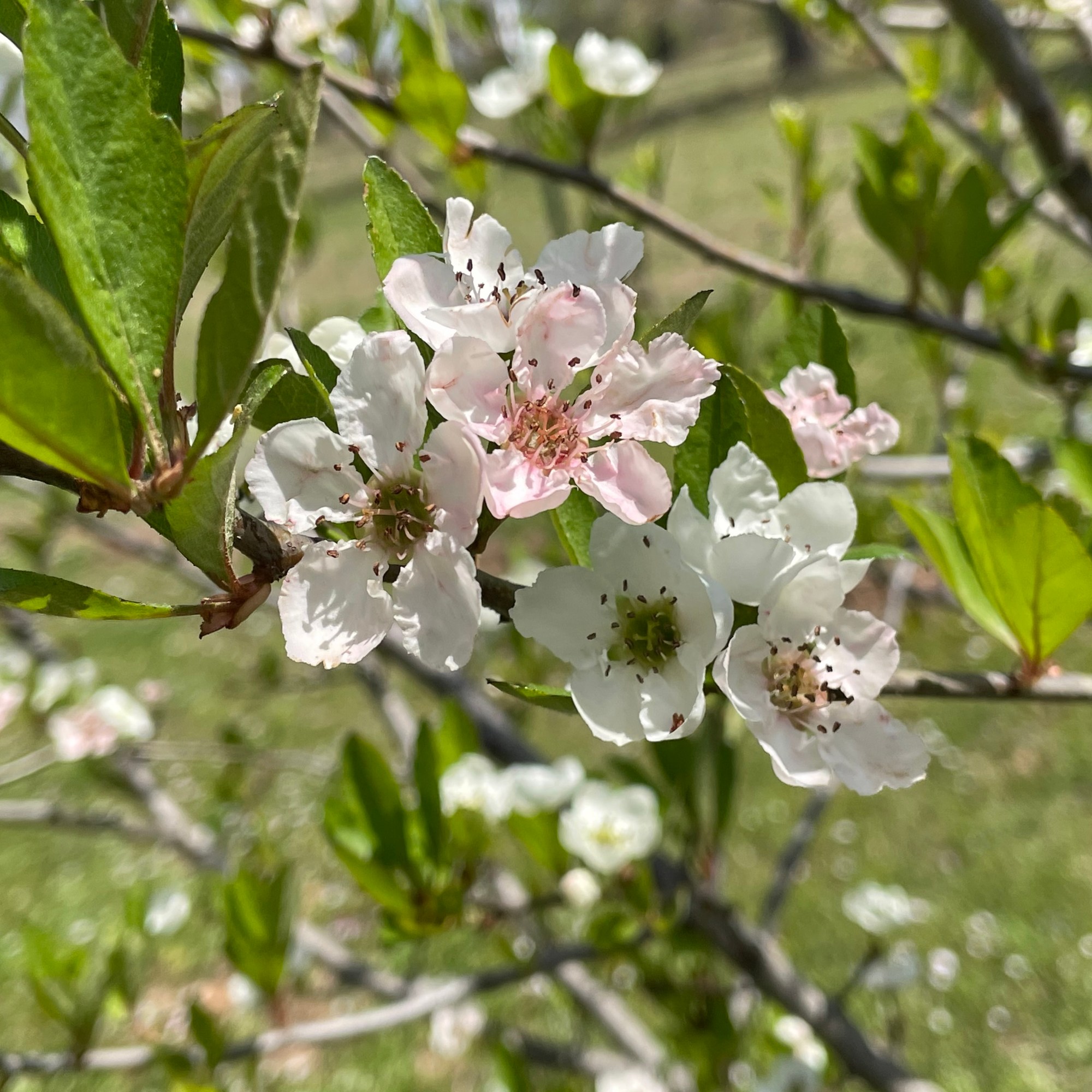
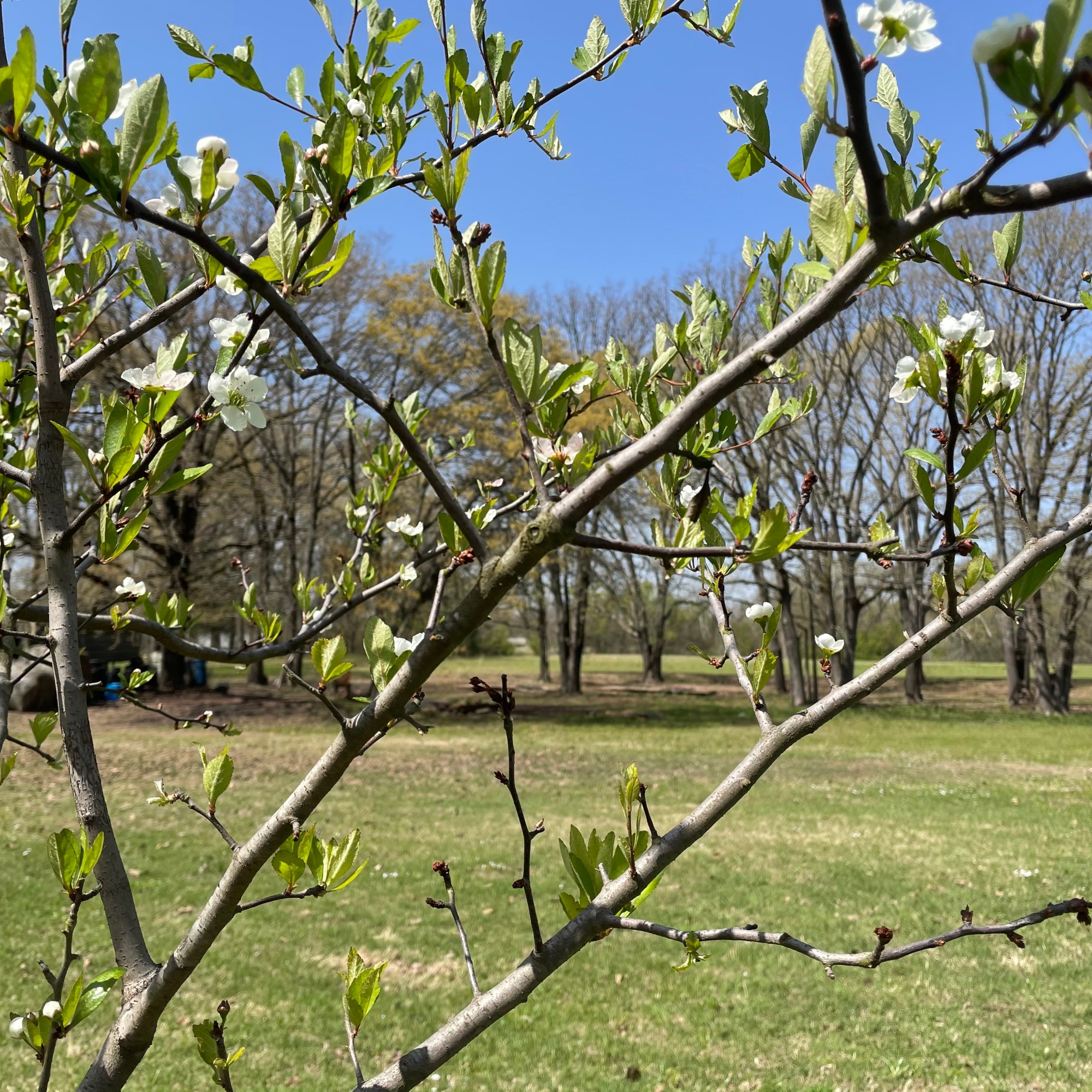
There is nothing more refreshing than seeing everything start to grow! Although the brutal week of of zero and below temperatures in February took its toll, our orchard trees and most of our hold over grafts from last spring survived it. As we replace some of our root stock that did not make it, and move into the full swing of spring grafting, we are thankful for every green leaf and blossom we see anywhere!
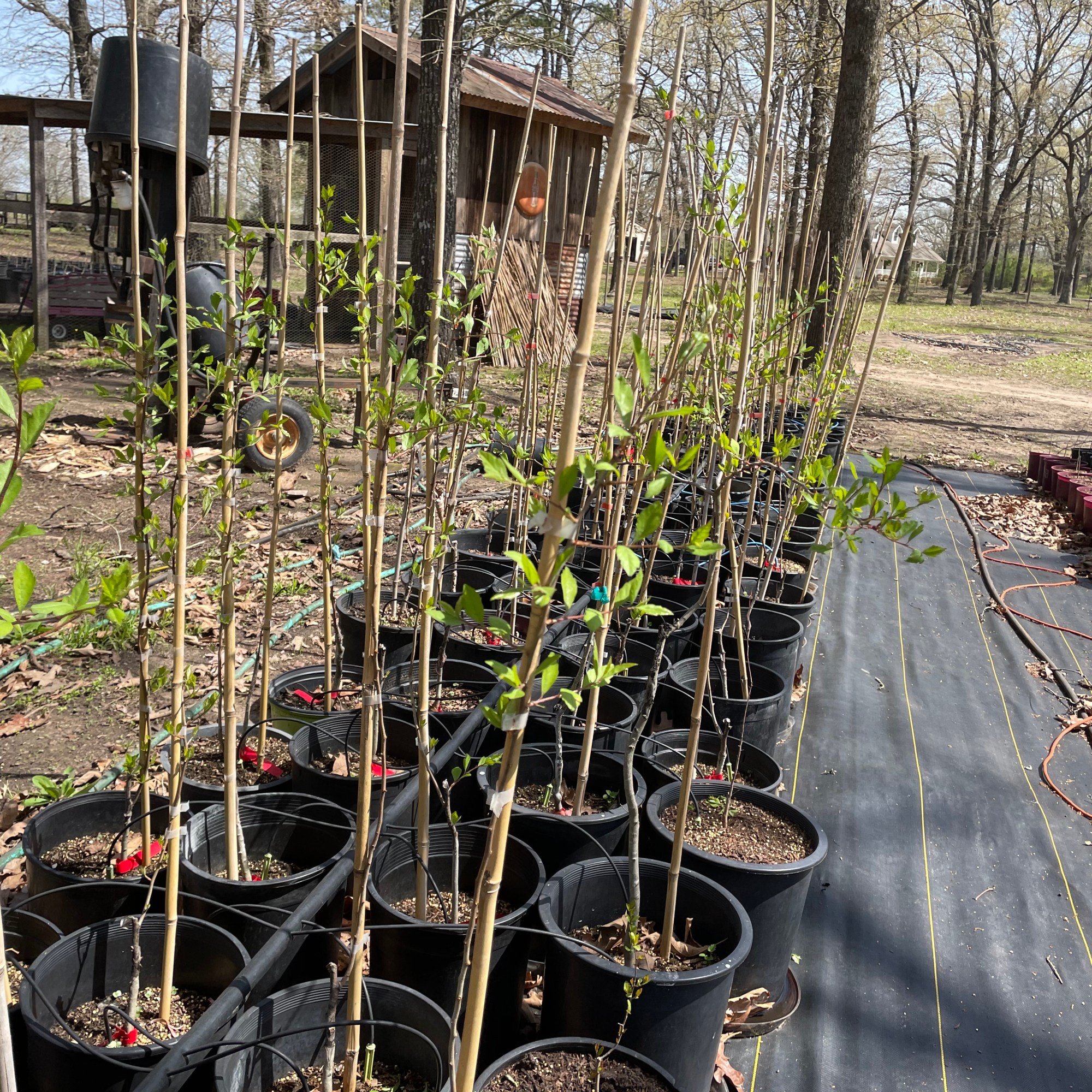

For those of you who are learning to graft trees, or want to learn, we would like to share the process, along with some essential tools, supplies and and tips that may be helpful. When we first started, we had the privilege of learning from an expert, Mr. Billy Craft, and we have learned more and more each year by talking to others, doing research, and of course by grafting! We have grafted up to 1250 trees in a season, but have settled at 600 to 700 new grafts each year as a norm. We are always working to increase our successful graft rate and here are a few tips that we have learned:
- Get the essential tools: good quality snips, grafting tools for V grafts, grafting knife. (We purchase most of ours off Amazon) Keep all tools sanitary by cleaning often with alcohol. We keep a supply of cotton balls with our tools for this purpose, and clean before each use, and again after grafting 25 or more trees.
- Use first quality scions that have been sealed and kept cool. Dipping scions in wax after cutting helps preserve freshness, then wrap in moist paper towels and zip lock bags and store in a refrigerator until you need them. Wrap with Parafilm before using. We keep our scions cool in an ice chest during the grafting process.
- Use plenty of Parafilm (nursery grafting tape) when wrapping scions or wrapping the finished graft. Wrap tight with grafting rubber bands first, to hold scion to root stock in the graft.
- Graft to first quality root stock that has been grown for at least a year to develop a healthy root ball.
- Use a good quality potting soil that retains moisture, pots that are big enough to allow root growth (we use 3 gallon pots), and a good slow release fertilizer—we use Scott’s Osmocote.
- Stick new grafts with cane to prevent damage from birds or accidents. Later, the cane will serve as support for growing trees. Use Tree Wound to cover any cuts or open areas on the root stock.
- Use color coded tags to mark different varieties.
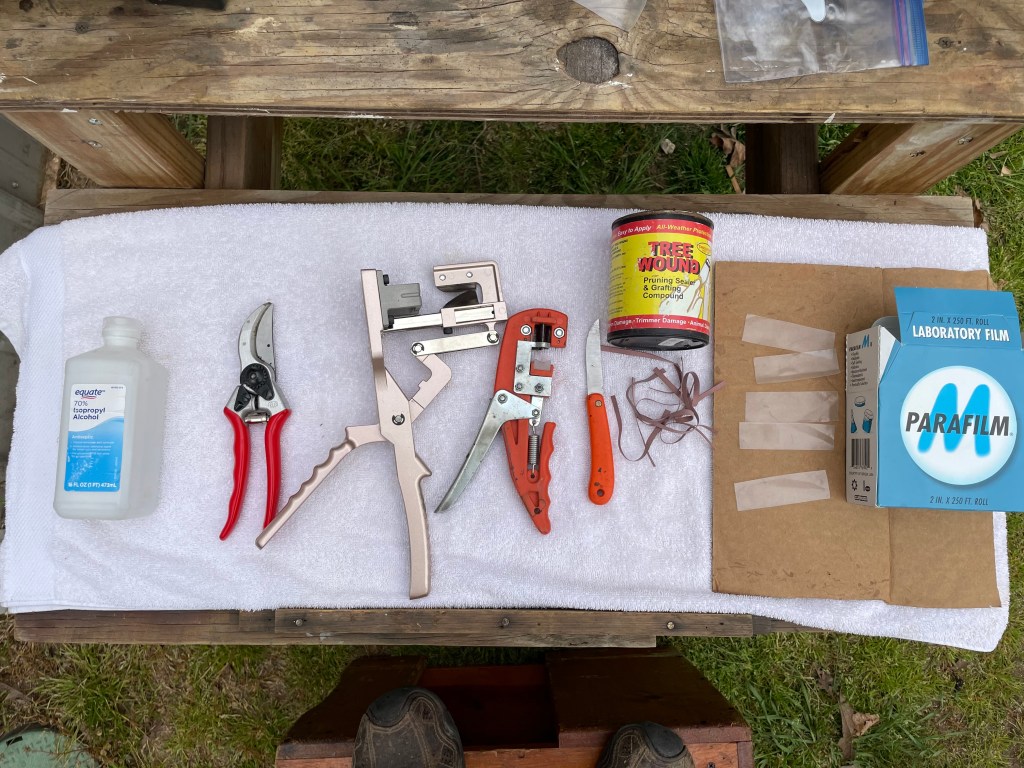
Essential grafting tools and supplies
Here are a few short videos describing the grafting process:
”The best time to plant a tree is 20 years ago. The second best time is now.”
Anonymous
 Home Harvest Farm--The Mayhaw Source